

The ITU world triathlon in Hamburg is over. Last weekend, on the 16th and 17th of July, triathletes from all over the came to Hamburg to swim, bike and run. Given it’s size, the event was extremely well organized. Starting Sunday Morning at 7am, every 8 minutes, 200 triathletes would begin their race.
Sadly, many competitors fell victim to the aftermath of Hamburg’s yearly music festival Schlagermove. Although the triathlon organizers had the roads cleaned in the morning, many athletes were forced to pull over and fix their flat tires halfway through the course due to shards of broken glasses and beer bottles (I’m assuming the athletes didn’t stop to catch rare pokémon).
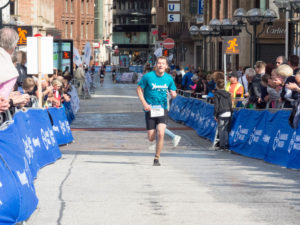 Last week, I explained how I got myself ready for the Olympic distance. Now, after the event, here are my thoughts:
- A big event such as a triathlon is a great motivation to schedule regular training sessions. To further boost motivation, I would love, if there was a way to connect and train together with some of the other triathletes even before the actual event.
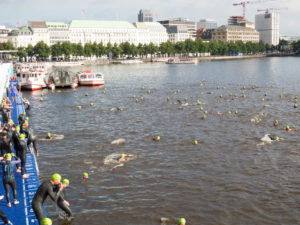 My swim training paid off. I went from struggling to complete a 50m lane to comfortably swimming 1.5kms. While I was not among the fastest swimmers, it goes to show how quickly even a total beginner can become reasonably good in a new discipline. Really, there aren’t any good excuses as to why one wouldn’t just try a new type of sports.
- There weren’t many athletes breast stroking. I decided for myself that I will make the switch to front crawling. If anyone can recommend a good beginners class for front crawling in Hamburg, let me know. =)
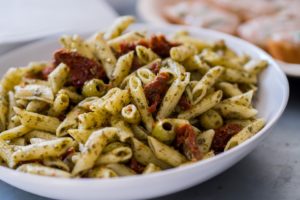 Eat sufficient amounts of carbohydrates at least on the last couple of days leading up to the competition. I only had a salad the night before. As a result, although I had cycled more than 40kms at a personally challenging pace before, I simply lacked the necessary energy during my second lap of cycling on the day of the event. Salad may be a healthy choice, but it’s not going to give you the energy you need for an event like this. Go for pasta, rice and potatoes instead.
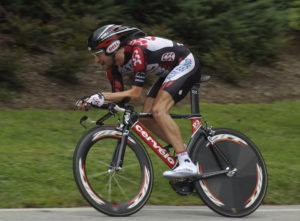 Despite occasional training sessions to improve the transitioning from cycling to running, I still struggled with that transition on the day. My take away from this is to simply incorporate more cross discipline transitions into my training.
Overall, I would certainly recommend taking part in an event like this. It’s such a good motivator and it’s so much fun on the day. The atmosphere is great and the ITU triathlon in Hamburg offers such an amazingly beautiful race course.
What experiences did you make at the ITU triathlon? Are you planning on doing a triathlon in the near future? What are your strategies to get ready for a triathlon? Let us know in the comments below.
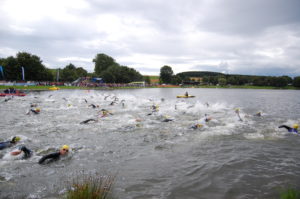 Swimming is by far my weakest point. Prior to training for my first triathlon, I would involuntarily swallow a gallon of water on a 50 m lane in the pool and afterwards take at least a couple of minutes to recuperate before attempting the next 50 m lane. With the help of friends, things did get a lot better since then. Working on my front crawl is something, I’ll have to work on after the ITU, though. As covering the entire distance without running out of breath already seemed challenging to me, I decided to stick to breast stroke for the ITU. Here is what I did:
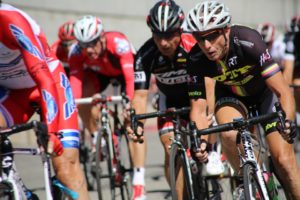 I have never been a big cyclist. In fact, I only bought a cheap racing bike a few weeks prior to the 7 towers triathlon. So, rather than focusing on speed, I simply tried to get comfortable with my bike. Where ever I had to go, I would go there by bike. On the weekends, I would try and go a little farther (up to 50km) whilst keeping a somewhat more ambitious pace. I don’t measure speed, but I would push it just a little outside of my comfort zone. For these longer distances, joining other cyclists helped me stay motivated and ensure I wouldn’t start slacking.
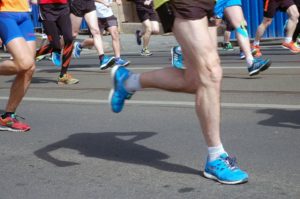 Running has always been my strongest point, so I didn’t feel I had to improve much in that department. One thing I realized in my first triathlon, though, was that I found it incredibly difficult to switch from cycling to running. After my calves almost cramped on the first 200 meters, it probably took me about 2 to 3 slow kilometers until I could finally run at my usual pace. Now to mitigate the effects cycling had on my running, I did two things: