
When it comes to sports, you typically get people who are really into that one single type of sports or you get those who try a bit of everything. Whatever you do, try and think about the benefits you get from the sports you pick and decide for yourself, whether your sports routine might just be too one-sided. Here are four aspects, that we feel should be covered by anyone who strives for a healthy body.
Cardiovascular Endurance
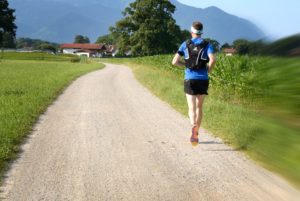 The cardiovascular system distributes oxygen and nutrients in your body. Without those two essentials, your body cannot function properly. To this end, we rely mostly on our heart and lungs. Exercises that use and strengthen these two parts of your body are called “cardio exercises”. Typically they will get your heart rate above your normal level and make you breath harder over an extended period of time.
Although most sports will get you a cardiovascular benefit, moderately intense exercises over an extended period of time will work best. Good examples are running, cycling and playing soccer.
Muscular Strength and Endurance
This is about 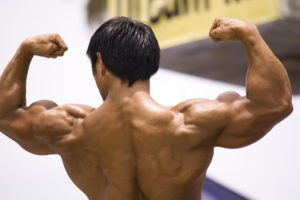 how much weight can your muscles move and how many times can you contract a group of muscles repetitively. Improving these aspects will boost your overall strength, stability and balance. In turn, you will become less prone to injury.
To get these benefits, lifting weights is the obvious answer. However, other sports such as bouldering and rowing are also good candidates as they make your muscles work a lot harder than usual.
Function
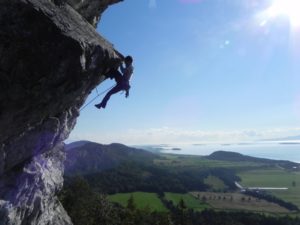 If you only isolate body parts in the gym and if you only focus on typical cardiovascular sports such as running, you will lack this aspect. It’s about coordinating your movements and teaching your body to engage all the right muscles to perform a certain task or movement.
Climbing, swimming and calisthenics are fantastic examples of sports that require your muscles to work in accord with one another.
Flexibility
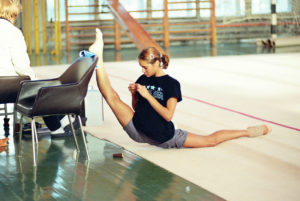 This is about joint mobility and range of motion: At which point will your ligaments, tendons and muscles restrict motion? In many sports, greater flexibility leads to better technique. Without the right degree of flexibility, correct and healthy execution of certain movements is impossible.
Yoga, stretching and dancing are great ways to become more flexible.
Conclusion
For almost every sport you need all of the above aspects to a certain degree. For a healthy body, don’t try and overdo it in any of these areas. Instead try and get a healthy mix of them by trying out different sports!

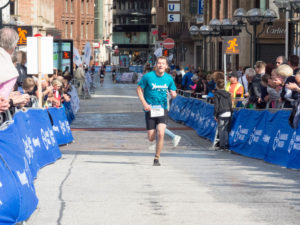 Last week, I explained how I got myself ready for the Olympic distance
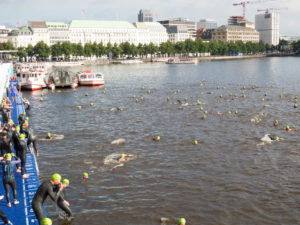 My swim training paid off. I went from struggling to complete a 50m lane to comfortably swimming 1.5kms. While I was not among the fastest swimmers, it goes to show how quickly even a total beginner can become reasonably good in a new discipline. Really, there aren’t any good excuses as to why one wouldn’t just try a new type of sports.
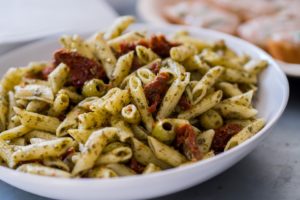 Eat sufficient amounts of carbohydrates at least on the last couple of days leading up to the competition. I only had a salad the night before. As a result, although I had cycled more than 40kms at a personally challenging pace before, I simply lacked the necessary energy during my second lap of cycling on the day of the event. Salad may be a healthy choice, but it’s not going to give you the energy you need for an event like this. Go for pasta, rice and potatoes instead.
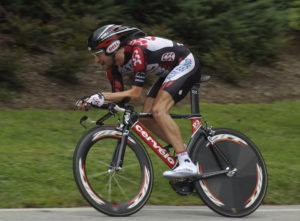 Despite occasional training sessions to improve the transitioning from cycling to running, I still struggled with that transition on the day. My take away from this is to simply incorporate more cross discipline transitions into my training.
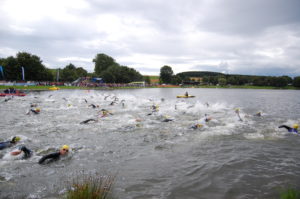 Swimming is by far my weakest point. Prior to training for my first triathlon, I would involuntarily swallow a gallon of water on a 50 m lane in the pool and afterwards take at least a couple of minutes to recuperate before attempting the next 50 m lane. With the help of friends, things did get a lot better since then. Working on my front crawl is something, I’ll have to work on after the ITU, though. As covering the entire distance without running out of breath already seemed challenging to me, I decided to stick to breast stroke for the ITU. Here is what I did:
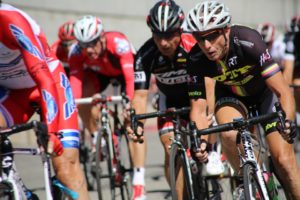 I have never been a big cyclist. In fact, I only bought a cheap racing bike a few weeks prior to the 7 towers triathlon. So, rather than focusing on speed, I simply tried to get comfortable with my bike. Where ever I had to go, I would go there by bike. On the weekends, I would try and go a little farther (up to 50km) whilst keeping a somewhat more ambitious pace. I don’t measure speed, but I would push it just a little outside of my comfort zone. For these longer distances, joining other cyclists helped me stay motivated and ensure I wouldn’t start slacking.
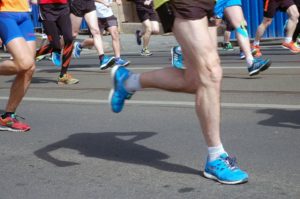 Running has always been my strongest point, so I didn’t feel I had to improve much in that department. One thing I realized in my first triathlon, though, was that I found it incredibly difficult to switch from cycling to running. After my calves almost cramped on the first 200 meters, it probably took me about 2 to 3 slow kilometers until I could finally run at my usual pace. Now to mitigate the effects cycling had on my running, I did two things: